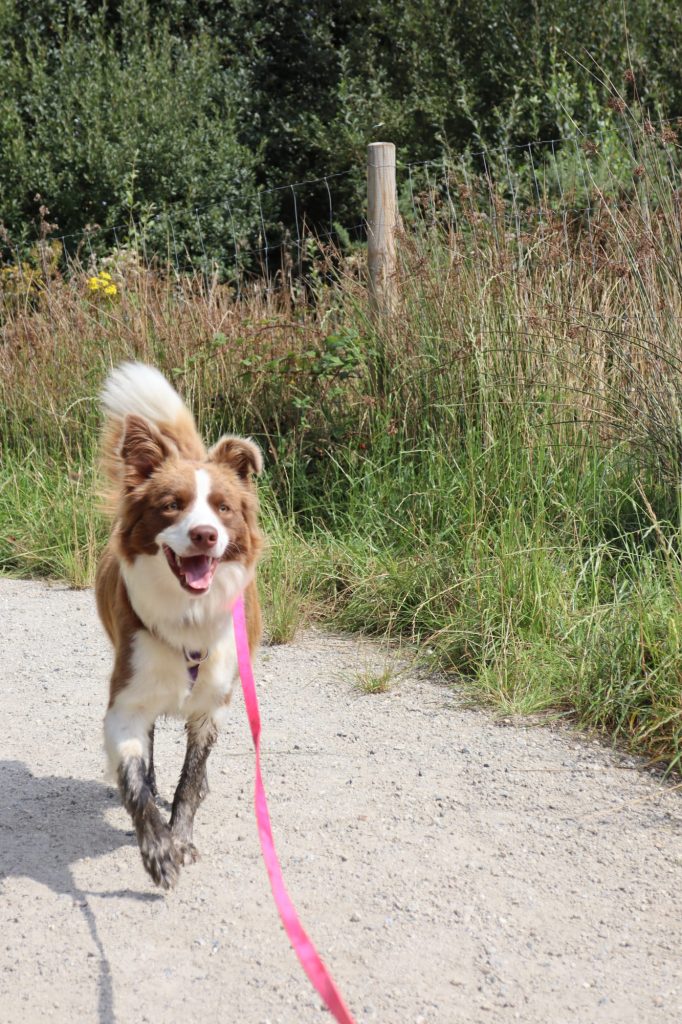
Many landowners assume that because no buildings are being put up, planning permission isn’t needed. In most cases, it will be. Planning law is concerned with how land is used as much as it is with what structures stand on it, and hiring out your field to people exercising dogs is usually classed as a change of use from the land’s original purpose, such as agriculture or equestrian use.
This is a well-established form of farm diversification and plenty of landowners have been through the process, so it is worth going in with realistic expectations rather than assumptions. Although a dog field involves little permanent building work, the application can still need to address access, parking, drainage, noise, lighting, ecology, landscaping and the fencing itself. Where applications run into difficulty, it tends to be over access arrangements, concerns about noise, or the fact that the field began operating before permission was sought.
This article covers why the change of use applies, what is, and isn’t, allowed under the 28-day rule, what else needs permission alongside the change of use, and how business rates are affected once you begin trading.
Please note, this is general guidance rather than planning advice, and it describes the position in England. Scotland, Wales and Northern Ireland operate their own systems, and the differences are not always small. Every local authority also interprets national policy slightly differently, so pre-application advice from your own planning department is the most useful first step for any specific site.
Why a dog field counts as a change of use
The first question is not quite whether you need planning permission, but whether what you are proposing counts as development that requires it. That depends on how the land is lawfully used now, what would change, and whether any permitted development rights cover part of it.
Under the Town and Country Planning Act 1990, agriculture is defined to include grazing, meadow land, crops and the keeping of livestock. It does not ordinarily cover the commercial use of agricultural land by members of the public for booked dog walking sessions.
Whether a change of use is significant enough to require planning permission is judged case by case, using what planners describe as ‘a matter of fact and degree’. This essentially means that they will take into account the scale and nature of what is happening on the land, compared with how it is lawfully used now. The test is not simply whether money changes hands. For a field being booked regularly by paying customers, though, the usual starting point is that a material change has taken place.
The permission you apply for is often a change of use to sui generis, a term meaning that the use does not fit within any of the standard use classes.
It is worth thinking ahead at this point about anything you expect to add later. Don’t assume that hardstanding, shelters or lighting will be covered by permitted development once the field is in commercial use, and bear in mind that conditions attached to your permission can restrict what you add afterwards. It is often simpler, and faster, to include everything you expect to need in one submission to start with.
The 28-day rule
In England, a permitted development right allows land to be used for a temporary purpose for up to 28 days in total in a calendar year, subject to the detailed conditions and exclusions in the legislation. The allowance did temporarily increase to 56 days during the pandemic, but returned to 28 days at the end of 2021.
Two details are easy to miss. The 28 days is a total for the year rather than an allowance for each separate activity, and part of a day counts as a whole day. The right also comes with a number of exclusions and limitations set out in the legislation, so it is important to check the details.
People sometimes mention this rule as a way to avoid submitting an application. It has genuine uses, but it is unlikely to support a year-round dog field.
- The allowance is small. Twenty-eight days a year is roughly one day in thirteen. Whether that covers your fencing and access costs is dependent on your own figures, but for most sites it will not.
- It does not authorise permanent works. The right covers the temporary use itself, along with moveable structures connected to it. Permanent fencing, gates and hardstanding are assessed separately.
- It cannot make a permanent change of use lawful. The right exists for occasional temporary use of land. It is not a route to operating year round, and relying on it will not regularise a use that has in practice become permanent.
Used properly, the allowance can be a good way to gauge local demand before committing to a large project, or to run a seasonal event.
What else needs permission
The change of use is the central part of the application, but it’s rarely the only element.
- Access. This is often one of the more challenging aspects of a dog field proposal. A field entrance designed for a tractor or livestock to use now and again is very different to one taking customers’ cars every hour. Highways officers will consider visibility splays, whether vehicles can enter and leave safely, and whether cars are likely to queue or park on the roads between sessions, causing disruption or danger.
- Parking and hardstanding. Laying stone or gravel can amount to engineering operations, depending on the scale and permanence of the work, in which case it needs to be assessed.
- Fencing. In England, permitted development generally allows fences up to 2 metres, or 1 metre where the fence adjoins a highway used by vehicles, subject to exceptions. Many dog field fences fall within those height limits, but other restrictions can apply, so a fence does not automatically have permitted development rights. Check the position alongside your access, and whether any condition on your permission affects it.
- Shelters and storage. Permanent shelters and buildings will usually need permission. Scale, permanence and whether the structure is fixed all matter, so a moveable field shelter and a built store are not treated the same way.
- Lighting. Floodlights used to increase booking slots in winter are one of the most common sources of objection, and can also raise ecological issues if the site is near hedgerows or a bat habitat.
- Signage. Advertisements sit under a separate consent regime, so check whether advertisement consent is needed alongside your planning application.
Business rates
Agricultural land can be exempt from business rates, but the rating definition of agricultural land is not the same as the planning one, so the outcome of your planning application does not settle the rating position by itself. What matters for rates is whether the land still qualifies as agricultural land for rating purposes, and recreational or other non-agricultural uses can be rateable.
Where the land no longer qualifies, the Valuation Office Agency assesses the site and gives it a rateable value, and your local council then applies any relief you are entitled to. In England, small business rate relief currently gives 100% relief on a property with a rateable value of £12,000 or less, tapering away to nothing at £15,000. Other properties your business occupies can affect whether you qualify, so relief is not automatic and the thresholds differ elsewhere in the UK. It is worth confirming your position with your council rather than assuming.
There are also VAT and inheritance tax considerations – these are worth discussing with your accountant before committing to the project.
Making the application
Start with pre-application advice. Most authorities offer this for a fee. Fees and the level of detail vary, and the response is not a decision or a guarantee, but it should give you an early view on whether access or a designation is likely to be the main obstacle on your site.
Consider a temporary permission. Some landowners choose to apply for permission for a fixed period of a few years, rather than a permanent change of use. If the venture does not work out, the permission expires; if it does, you can apply for permanent permission with a trading record to bolster your application. Check what the permission requires at the end of the period, as conditions often cover restoring the land. A permission of five years or less can also affect whether biodiversity net gain applies, which is covered below.
Check whether biodiversity net gain applies. Statutory biodiversity net gain requirements apply to many developments in England, and the exemptions changed on 6 August 2026. Sites of 0.2 hectares or less are now generally exempt, as are certain temporary developments permitted for five years or less, subject to the conditions applying to those exemptions, including restrictions relating to onsite priority habitat. Bear in mind that 0.2 hectares is about half an acre, measured across the whole application site. A proposal involving little building work does not automatically fall outside the requirements either. Check the position early, because it affects both what your application needs to include and what it costs.
Address the likely objections. Set out what you will do to mitigate them in the application itself. Common issues raised in objections can include traffic movements, noise, dog waste, hours of operation and the effect on nearby homes. Booking-based access is helpful here, as you can show that there will be a fixed limit on the number of vehicles arriving each hour.
Check the size of the site. If the application site is 1 hectare or more, it is within the major development threshold, which can affect consultation requirements, fees and timescales.
Protected land does not rule the project out, but different policies apply. National Parks, National Landscapes (formerly Areas of Outstanding Natural Beauty) and Green Belt each bring additional or more restrictive planning policies, so what your application needs to demonstrate depends on the designation and on what you are proposing. The limited built development involved in a dog field can help, although your own proposal may still include permanent fencing, access and parking works. If the land is subject to a stewardship or subsidy scheme, check its terms separately, as they operate independently of planning.
If the field is already open
If you are reading this when your field is already open and you are taking bookings, don’t panic, but do act. A retrospective application is assessed on the same planning merits as any other, so having started does not make the proposal itself weaker.
The risk is practical rather than technical. Permission isn’t guaranteed, and the authority can pursue enforcement while your application is being considered. If an enforcement notice has already been issued, the position is harder again: the authority can decline to determine a retrospective application in certain circumstances, and your ability to argue the planning merits at a later appeal is restricted. That is why, if you think you may be operating without the necessary permission, it is sensible to seek advice promptly rather than waiting for enforcement action.
Contact the planning department directly. Government guidance says authorities should generally avoid formal enforcement where the development is acceptable and an application is the appropriate route, although that is guidance rather than a guarantee, and the right next step will depend on your circumstances.
A checklist for your planning application
- Confirm the current planning status of the land, along with any stewardship or subsidy conditions attached
- Arrange pre-application advice with your local planning authority
- Get a realistic assessment of the access before committing to other costs
- Decide whether to apply for temporary or permanent permission
- Check whether biodiversity net gain applies, and whether any exemption covers your site
- Prepare responses to the usual concerns: traffic, noise, waste, hours and neighbouring properties
- Include everything you expect to need in one application, covering fencing, parking, shelter and lighting
- Speak to your accountant about business rates, VAT and agricultural relief
- Allow for application and consultant fees, and a realistic timescale, in your budget
This will not cover every site, but it is a sensible order in which to work.
After permission: setting up an enclosed dog field
Once permission is in place, attention moves to fencing, access, insurance, pricing and filling the field. How much land you need and whether the figures work are both worth reading at that stage, and our landowner FAQs cover the wider picture of setting a field up.
Muddy Booking handles your bookings. Customers book and pay online, gate codes are issued automatically, and cancelled sessions are offered to a waiting list without you needing to do anything. There is nothing to set up until permission is granted, but it’s good to familiarise yourself with how it works.
Frequently asked questions
Do you need planning permission for a dog walking field? In most cases, yes. Fencing agricultural land and hiring it out to dog owners will often amount to a material change of use, which requires planning permission unless permitted development rights or another exception applies, even though no buildings are involved. Whether it applies to your site depends on the land’s existing lawful use and the scale of what you are proposing, so it is worth confirming with your own authority.
Can I rely on the 28-day rule instead? Only in limited circumstances. In England, permitted development allows the use of land for up to 28 days in total in a calendar year, subject to exclusions in the legislation. It does not authorise permanent fencing or parking works, and it cannot make a permanent change of use lawful. It suits testing demand better than operating.
Do I need permission just to put up a fence? Not always. Permitted development in England generally allows fences up to 2 metres, or 1 metre alongside a highway used by vehicles, subject to exceptions, and most dog field fencing falls within that. Conditions on your permission can restrict it and the position may differ next to your access, so check before ordering materials. Including the fencing in your main application avoids the question.
Will I have to pay business rates on a dog field? Possibly. The rating definition of agricultural land differs from the planning one. If the land no longer qualifies as agricultural for rating purposes, the Valuation Office Agency will assess a rateable value and your council will apply any relief due. In England, small business rate relief gives 100% relief up to a rateable value of £12,000, tapering to nothing at £15,000, but other properties your business occupies can affect eligibility.
How long does an application take? This varies by authority and by the complexity of the site. Pre-application advice will give you a realistic timescale for your area.
Can permission be granted in a National Park or Green Belt? It isn’t ruled out. These designations bring additional or more restrictive planning policies, so what you need to demonstrate depends on the designation and on what you are proposing. The limited built development involved in a dog field can work in its favour.
What if I have already started taking bookings? Contact the planning department rather than waiting to be contacted. A retrospective application is judged on the same merits as any other, but enforcement can run alongside it, and once an enforcement notice has been issued the authority can decline to determine your application in some circumstances and your appeal rights are restricted.